


Originally posted on www.anchornews.org
By Joan D. Warren
NEW BEDFORD— For many young adults, the path from adolescence to independence is filled with uncertainty. For those experiencing homelessness or housing instability, the journey can be especially daunting. Recognizing this growing need, Catholic Charities of Fall River launched its Transitional Youth Housing Program in 2023 — and already, lives are being transformed.
Designed for individuals ages 18–24 from the Bristol County area, the program serves young adults who are homeless or at risk of homelessness under Massachusetts state guidelines. Funding comes from a $492,500 contract with the Executive Office of Health and Human Services (EOHHS).
Since its inception, the program has helped more than 25 young adults move into stable, independent housing. In just the past quarter, 11 participants successfully transitioned into long-term living arrangements.
“Our goal is to help each participant become fully self-sufficient and independent within 24 months,” said program coordinator Rosa Albassan, who brings both professional expertise and lived experience to the role. Once homeless herself at age 20, she knows the challenges firsthand. “It was a Catholic organization that helped me. We lived in a shelter for seven months. I worked three jobs and eventually became self-sufficient. I know how hard it is — but I also know it’s possible.”
The program offers 14 beds across several scattered-site apartments in New Bedford and Fall River, including studio units, two-bedroom apartments, and one emergency occupancy unit. All apartments are fully furnished and privately owned by local landlords, providing a sense of dignity and normalcy that traditional shelters often cannot.
Participants, who average 21 to 22 years old, enter the program through self-referrals, shelters, or partner agencies. Many are navigating their first episode of homelessness, while others are aging out of the Department of Children and Families (DCF) system or can no longer remain with family due to conflict or changes in public housing policy. Each resident may bring up to three bags of belongings and typically stays for about a year.
From day one, each young adult is paired with one of three dedicated case managers who support them at every step — beginning with mental health evaluations and weekly in-person meetings. Once emotional and mental wellness is stabilized, the focus shifts to education, employment, and long-term planning.
Currently, five participants are enrolled in college working toward associate degrees, two are studying for their HiSET (formerly GED), and three are employed full-time. Those attending college also hold part-time jobs, and all participants are encouraged to save money during their stay. The program covers all living and educational expenses.
“This program gives them the breathing room to focus on goals instead of just survival,” Albassan explained. “I set the tone during intake. They need to know this is an opportunity — one that requires commitment. But many are so grateful just to have a bed, a roof, and the freedom to seek help without fear.”
While the program is currently at capacity, openings arise periodically. The need remains high, with referrals for young women arriving at nearly twice the rate of those for men.
Many participants also serve on the program’s Youth Action Board (YAB), an advisory group that meets monthly to discuss services, identify needs, and plan community outreach initiatives. This year, the YAB organized a Christmas give-back project to assist local teen parents.
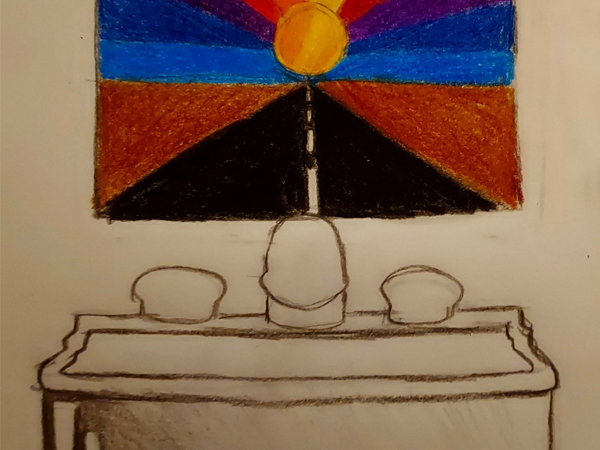
One participant, Angelena, described how the program has restored her sense of stability: “I was just thinking about the small things — how having a sink to do my dishes or having privacy felt. I was so grateful and happy just to do mundane tasks again. The road ahead is kind of how I feel about the program — how I feel a hope at the end of the road.”
In true Catholic spirit, the Transitional Youth Housing Program reflects the Church’s mission to serve the most vulnerable, offering not just shelter, but hope and a path forward. As Albassan puts it: “It takes hard work — but, believe me, it can be done.”